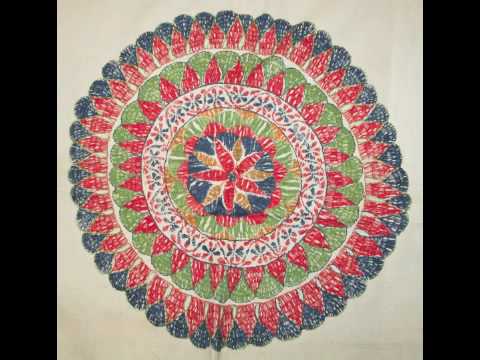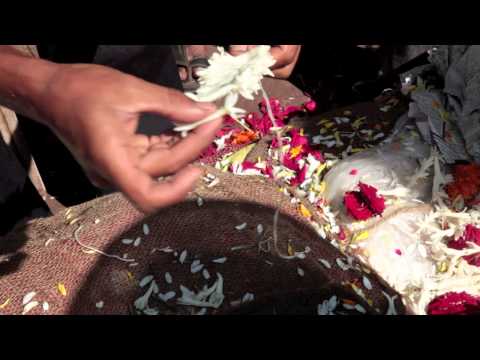
An amateur video of a Singhalese Lady from Sri Lanka who is producing her own colorful fabrics to later on make shirts and sarongs sold mainly to foreign visitors looking for a handmade and more personal gift to carry home. Shirts are custom made for each client if requested with designs unique to the clients orders.
Batik: Melted wax is applied to cloth before being dipped in dye. It is common for people to use a mixture of beeswax and paraffin wax. The beeswax will hold to the fabric and the paraffin wax will allow cracking, which is a characteristic of batik. Wherever the wax has seeped through the fabric, the dye will not penetrate. Sometimes several colours are used, with a series of dyeing, drying and waxing steps.
Thin wax lines are made with a canting, a wooden handled tool with a tiny metal cup with a tiny spout, out of which the wax seeps. After the last dyeing, the fabric is hung up to dry. Then it is dipped in a solvent to dissolve the wax, or ironed between paper towels or newspapers to absorb the wax and reveal the deep rich colors and the fine crinkle lines that give batik its character.Maintaining batik
For all BATIK Textiles the following rules apply:
Hand wash, or best just soak the cloth
Use very little detergent, best to use lerak
Hang the batik directly, do not squeeze the cloth
Do not hang in direct sunlight
The iron should not directly touch the cloth, best to use a steam iron
Silk batik is best dry-cleaned
Do not spray perfume onto the cloth directly (Wikipedia)
This short video of 4 minutes covers by Libby Langdon covers 5 design mistakes that home owners make with small spaces, so if you have got a small space have a good look and be surprised. Here are the top five design mistakes and how to fix them quickly.
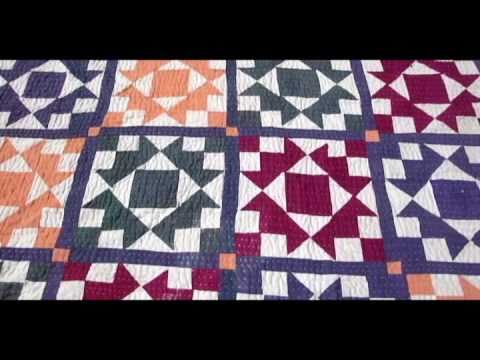
Timeless Textiles of India is the first extensive survey of Indian quilts compiled in India or abroad. It identifies and explores the historic
and contemporary context of quiltmaking, allowing the reader to share in the contextual relationship between this art and Indian society.
Over 600 photographs, captured in rural villages,museums and urban settings, present the richness of this pervasive textile tradition. From the
simplest utility quilt to the most elaborate Indo-Portuguese coverlet, the book details the diverse designs, varied techniques and multiple uses of
the twenty-five unique quilting genres discovered by the author during his four years of research.
Indian quilters are part of a living tradition that dates back 4,000 years to the Indus Valley civilization. The spirit of their lives is recounted
in fascinating stories and captivating portraits. The language of their quilts articulates the symbols and motifs familiar to these quilters and
their communities. Whether made for use in the home, to signify religious asceticism, or to be given as gifts, the quilts are infused with spiritual
significance and folk meaning. The eclectic imagery not only draws upon a host of classic themes but also upon the objects and events of everyday life.
This pioneering book raises from obscurity the remarkable, yet largely overlooked, quilts of India as an important class of Indian textiles. Written
for a general audience as well as the most ardent professional, the book provides an intimate look into the fabric of Indian life through quiltmaking.
(The background music is by Shraddha, and is very relaxing)
The Culture and Context of Goan Quilts. Interesting slides on quilts from the Goa region of India, and of interest for any quilt enthusiasts or viewers looking for inspiration using a wide range of colours